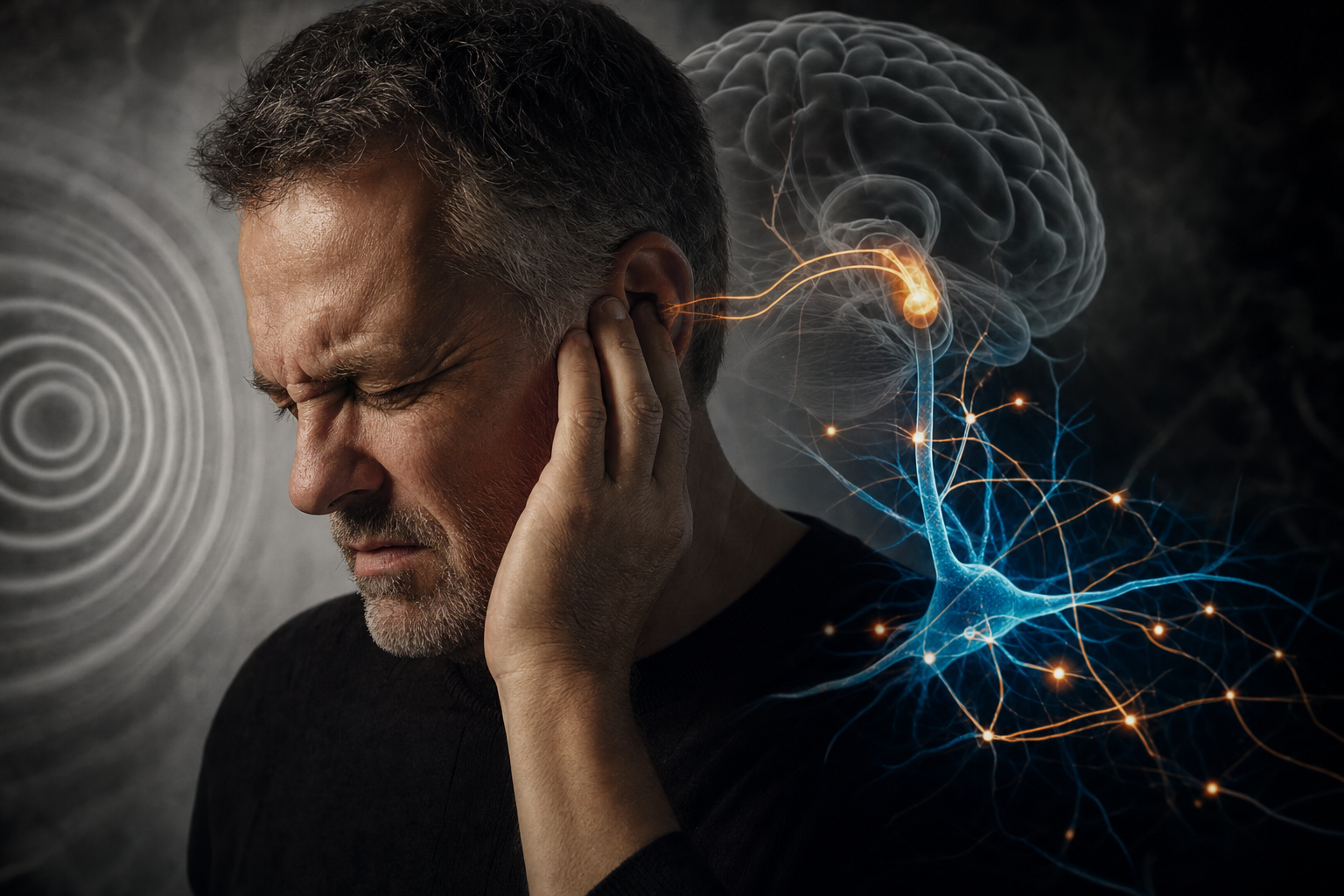
Serotonin Circuit Identified That May Worsen Tinnitus, Challenging Its Role in Emotional Processing
1. What is happening?
A new „ScienceDaily report on serotonin and tinnitus“ describes mouse research using advanced light-based brain stimulation to map a serotonin-driven circuit that appears to intensify tinnitus-like perception rather than reduce it. Within Science & Human Behavior, the finding challenges the simplified view of serotonin as broadly calming or mood-supportive, especially when specific sensory pathways are involved.
2. The Somatic & Systemic Context
Serotonin is not a single-effect chemical signal. The broader research context shows why that matters: UC Davis scientists recently developed amino-acid-based molecules that activate serotonin receptors linked to neuroplasticity and depression relief without producing psychedelic-like perceptual effects in preclinical models, according to „ScienceDaily coverage of novel serotonin-receptor compounds“. That line of work suggests serotonin systems can support learning flexibility under the right conditions, while the tinnitus study suggests that activating a specific pathway may also heighten aversive sensory experience.
For somatic and behavioral practitioners, the practical lesson is precision. A client’s felt sense, sound sensitivity, attention patterns and threat response can be shaped by neurochemistry, context and expectation. This also connects to behavioral research on how quickly external systems can shift motivation and self-reliance: a „Psychology Today report on AI interactions and motivation“ describes how brief AI use may alter performance, effort and reliance on personal judgment within minutes. A related „PNAS reference study“ further supports the need to examine behavior as a dynamic exchange between biology, environment and perceived support.
3. The Dual Perspective
What this means for daily life
If you live with tinnitus, this research may help explain why the inner sound can feel louder or more threatening during certain body states, emotional periods or medication changes. The finding does not mean serotonin is “bad.” It means the nervous system can respond differently depending on which circuit is active and what the brain is already predicting.
For daily regulation, the takeaway is to track patterns without overinterpreting them. Notice whether tinnitus shifts with sleep, stress load, caffeine, emotional activation, new medication routines or periods of intense monitoring. Gentle grounding, orienting to external sound, paced breathing and reducing compulsive checking may support steadier regulation. Medication questions should stay with a licensed medical professional. Do not start, stop or change prescribed treatment based on this study alone.
What this means for your practice as a coach, facilitator or bodyworker
For practitioners, this research sharpens scope of practice. Tinnitus is not only a “stress symptom” or a simple attention habit. It can involve sensory circuits, neurochemical modulation and aversive prediction. When clients present with tinnitus-related anxiety, sound sensitivity or body vigilance, intake should include careful referral-aware questions about medical evaluation, hearing history and current medications without giving pharmacological advice.
In session work, this supports a more conservative pacing of exposure, interoceptive tracking and sound-based exercises. A client whose neurochemical state is shifting may respond differently to the same somatic cue from week to week. Build in consent, titration, symptom monitoring and clear referral pathways. For coaches and bodyworkers, the ethical line is clear: support regulation, education and behavioral awareness while leaving diagnosis, medication management and neurological treatment to qualified clinicians.
4. Key Takeaways
- Serotonin can support flexibility in some circuits and intensify distressing perception in others.
- Tinnitus work needs careful pacing, medical context and clear scope boundaries.
- Somatic practice should track lived patterns, not reduce complex symptoms to mindset or stress alone.
Sources & References:
- Original News – „Serotonin Circuit Identified That May Worsen Tinnitus“
- Context – „Novel Psychedelic-Like Compounds Show Antidepressant Potential Without Hallucinogenic Effects“
- Reference – „PNAS Reference Study“
Recommended Video Resource:
Why we recommend this: It offers a concise visual entry point into why serotonin may affect tinnitus perception differently across brain circuits.
Further Reading on The Conscious Channel:
For related coverage, follow our Science & Human Behavior reporting on how brain chemistry, perception and regulation shape daily experience. This topic is especially relevant for practitioners working at the boundary of Behavioral Psychology and body-based care.
#SerotoninTinnitusCircuit #TinnitusSomaticPractice #ScienceAndHumanBehavior #BehavioralPsychology