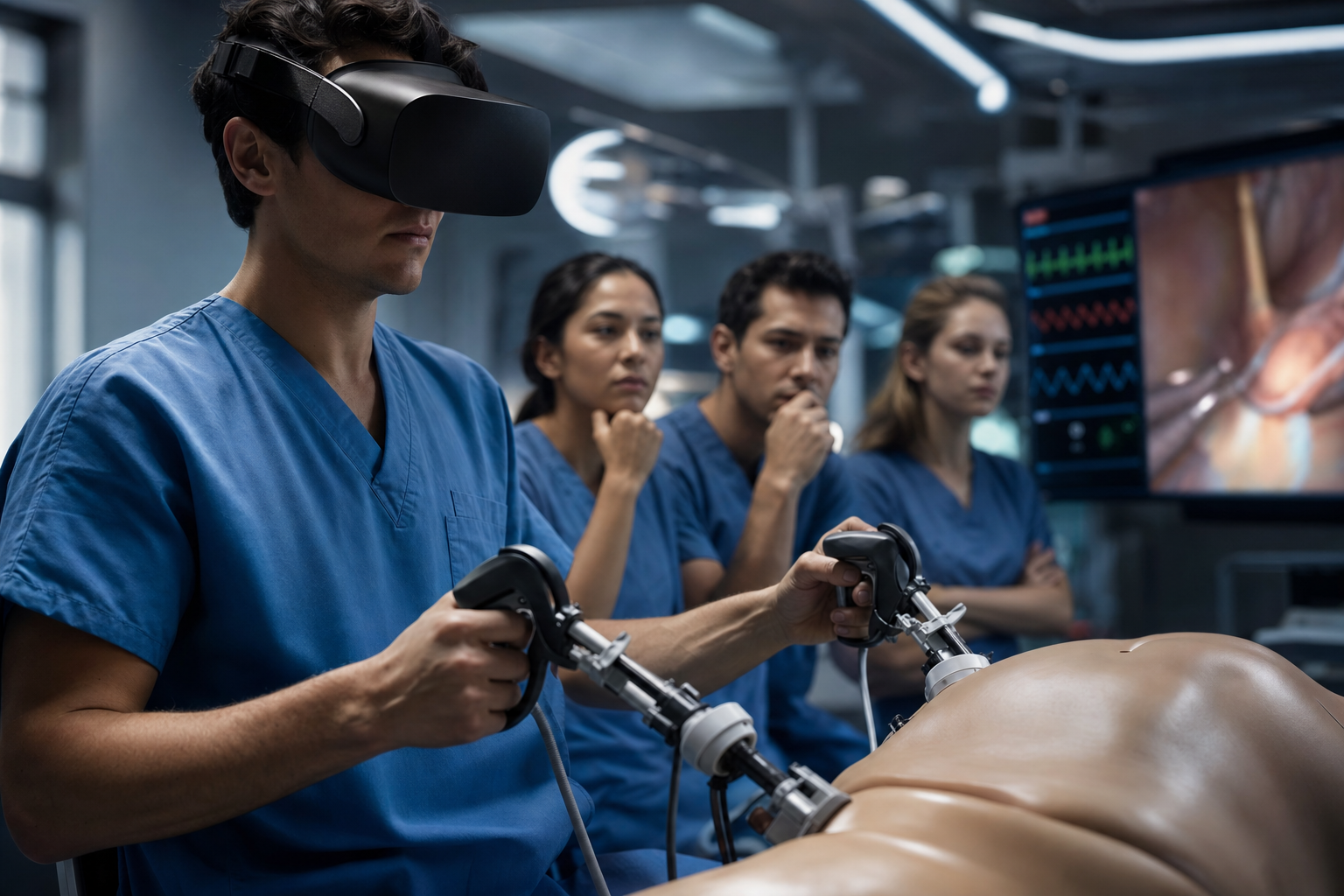
Immersive VR Training Modulates Autonomic and Somatic Responses in Surgical Residents
1. What is happening?
A new study on „Immersive VR Training Modulates Autonomic and Somatic Responses in Surgical Residents“ compared neurosurgical residents in high-fidelity immersive VR simulations with traditional box training. Researchers tracked heart rate variability, skin conductance and muscle tension, finding that immersive VR training produced higher sympathetic activation followed by faster recovery. The data suggests VR can be used not only for technical rehearsal but also to condition autonomic and somatic responses under controlled pressure.
2. The Somatic & Systemic Context
The broader training context is outlined by the University of North Carolina in „Immersive VR training creates safer operating rooms“, which frames VR as a way to practice complex surgical scenarios before entering the operating room. From a nervous system perspective, this matters because immersive environments combine perception, motor planning, emotional load and real-time feedback. A PubMed-indexed reference, „PMID: 11317813“, also sits within the longer research lineage showing that virtual environments can meaningfully influence human physiology rather than remaining a purely cognitive or visual experience. For somatic professionals, the key shift is this: VR is becoming a controlled stress-and-recovery medium, where attention, muscle tone, arousal and sensorimotor learning can be observed with increasing precision.
3. The Dual Perspective
What this means for daily life
For clients and non-clinical readers, the most relevant takeaway is that the body often responds to immersive digital environments as if something real is happening. Heart rate, sweating, muscle bracing and recovery time can change even when the person “knows” they are in a simulation.
This can help explain why intense digital experiences may leave some people feeling wired, tense, disoriented or unusually tired afterward. It also suggests a practical self-regulation lens: after immersive VR, gaming or intense screen-based work, notice your breathing, jaw, shoulders, hands and belly. If the system feels activated, step out of the stimulus, orient to the room, let the eyes track the physical environment and give the body time to settle before moving into sleep, conflict conversations or complex decisions.
What this means for your practice as a coach, facilitator or bodyworker
For practitioners, this research supports a more precise view of VR: it is not just a novelty tool. It can generate measurable autonomic and somatic load, which means it should be used with intention, pacing and clear consent.
In coaching or body-based practice, VR-informed work may become relevant for graded exposure to performance stress, interoceptive awareness, breath pacing and recovery training. The ethical boundary is equally clear: practitioners should not present VR tools as medical treatment, surgical training or trauma therapy unless they are licensed and appropriately trained for that scope. Session design should include screening for discomfort with immersive media, clear stop signals, post-experience integration and attention to recovery markers such as breath quality, orientation, muscle release and the client’s ability to re-engage with the present environment.
4. Key Takeaways
- Immersive VR can activate the nervous system more strongly than traditional training.
- Faster recovery after VR stress may be trainable under controlled conditions.
- Somatic use of VR requires consent, pacing and clear professional boundaries.
Sources & References:
- Original News – „Immersive VR Training Modulates Autonomic and Somatic Responses in Surgical Residents“
- Context – „Immersive VR training creates safer operating rooms“
- Reference – „PMID: 11317813“
Recommended Video Resource:
Why we recommend this: It shows how VR may influence arousal, sleep-related patterns and nervous system regulation beyond surgical training.
Further Reading on The Conscious Channel:
For more coverage on embodied technology, digital stress physiology and nervous system-informed practice, explore our Tech & Digital Embodiment features as they expand this research into practical contexts.
#ImmersiveVRTraining #SurgicalResidentRegulation #TechDigitalEmbodiment #VRARNervousSystemImpact